There are many players in the innovation ecosystem. There are researchers, universities and tech transfer offices. There are regulatory agencies, government bodies and legal teams. There are funders and investors. There are countless companies, from the smallest start-ups to the biggest pharmas, all on the lookout for their next competitor or potential partner.
In the middle of that there is an entrepreneur, trying to make sense of it all.
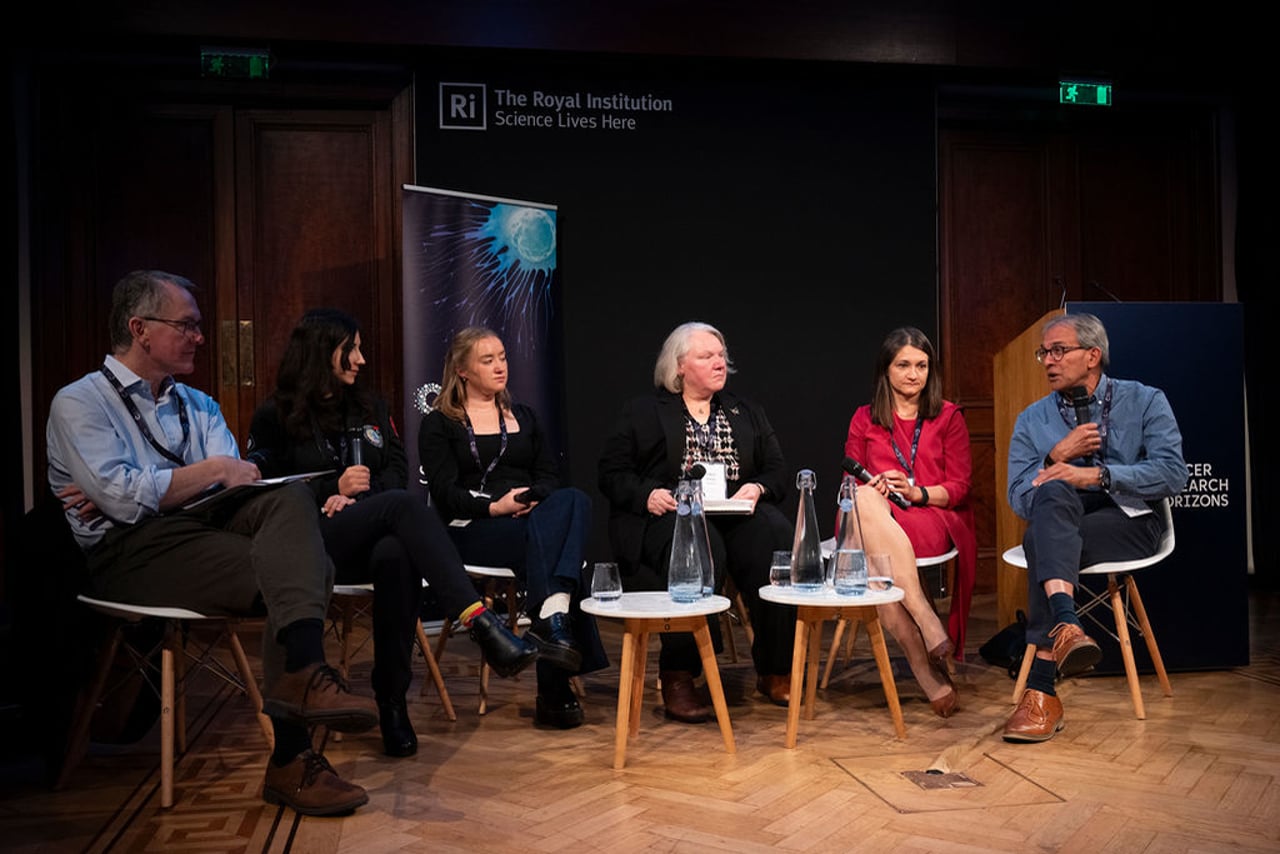
Our yearly Innovation Summit helps entrepreneurs navigate this complex ecosystem by bringing together people from across the sector to share their experiences and offer advice. At this year’s event, which took place on 18 November 2025 at the Royal Institution in London, one panel encapsulated this by discussing one of the key challenges for early-career entrepreneurs: how to harness the power of the ecosystem.
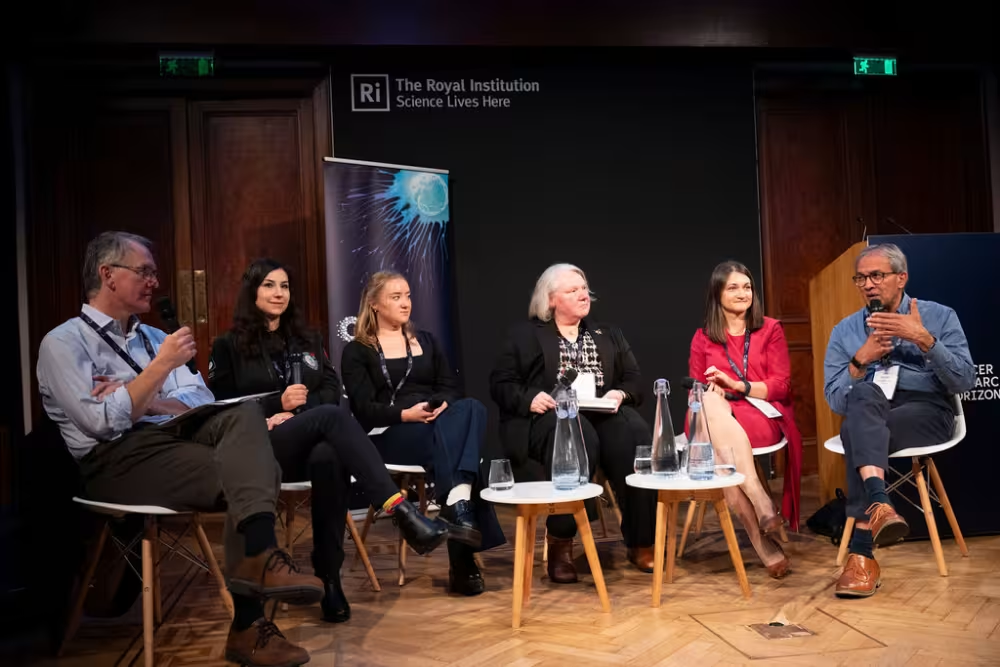
Because no entrepreneur ever made it alone. It is only by learning from and collaborating with the relevant players across the ecosystem that scientific discoveries turn into patient benefit.
“Entrepreneurship is a team sport,” said Uday Phadke, co-founder of Triple Chasm. “Make sure you identify other members of the team you need to talk to.”
To do that you need to speak their language, as highlighted by Sophie James, co-founder of immunotherapy start-up Anomer Bio. “When you move into entrepreneurship, there are so many different stories you need to tell,” she said. “Whether you’re pitching to investors, clinicians or pharmaceutical companies, you really need to know your audience.” This can be an adjustment for those coming from academia like Sophie, where researchers mostly present their work to other researchers.
One way to work on those communication styles is by joining accelerator programmes, where participants can learn how to speak to different players across the ecosystem. This was a common theme throughout the Innovation Summit: most of the founders who appeared on the panels had taken part in an accelerator and said the experience was invaluable. Have a look at our entrepreneurial programmes to see which one might be right for you.
Karolina Zapadka, Senior Partner at the BioInnovation Institute, said the number of programmes available in the UK has increased massively over the past few years, which is a symptom of how much the whole ecosystem has grown. Whereas in the past founders would have been forced to go to the US for funding and support, there is now much more available closer to home. “It’s a really exciting time to set up a business in this country,” she said.
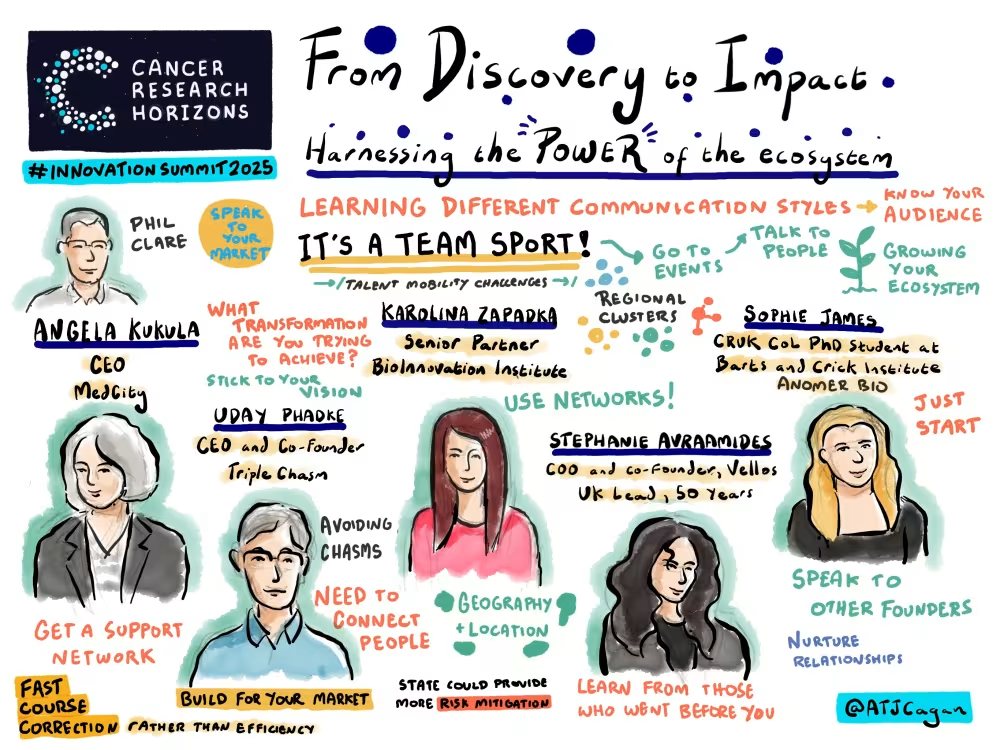
The panel also highlighted the benefits of other events beyond accelerators, particularly for meeting other entrepreneurs. Stephanie Avraamides, co-founder of Vellos and UK lead of Fifty Years, said to ask people what communities they’re part of and start documenting that. “You need to grow your own personal ecosystem,” she said.
This is not only important for growing a business, but also for growing a support network. “Entrepreneurship can be quite a lonely journey,” said Angela Kukula, CEO of MedCity. “Some of the things we’re doing are about helping people find their friends.”
Phil Clare, the panel chair and CEO of Queen Mary Innovation, echoed the importance of this. “Take care of yourself as well,” he said. “There’s no point building a great company if you collapse.”
Phil followed up by asking the panel what one piece of advice they would give to a researcher aiming to transition into entrepreneurship.
“Just start,” said Sophie. “And think about ways you can generate value without any funding.”
“Focus on what your values are and what you’re really trying to do,” said Uday.
“Enjoy your journey,” said Karolina, before citing that many entrepreneurial scientists have several companies. “The first one will be difficult, but the next one will be much easier.”
Angela said to find others that are at a similar stage to you and added, “It’s never too early to start talking to the people who are going to be your customers.”
“Learn about how those who have walked the path before you have done what they’ve done,” said Stephanie.
There are many players in the innovation ecosystem, but that is where its power comes from. To harness that power you need to find the people who have tried, failed and succeeded before, and learn from them. To paraphrase another scientist: to see further, you must stand on the shoulders of giants.