
What was your route to your current role and what sets Cytospire apart in cancer therapeutics?
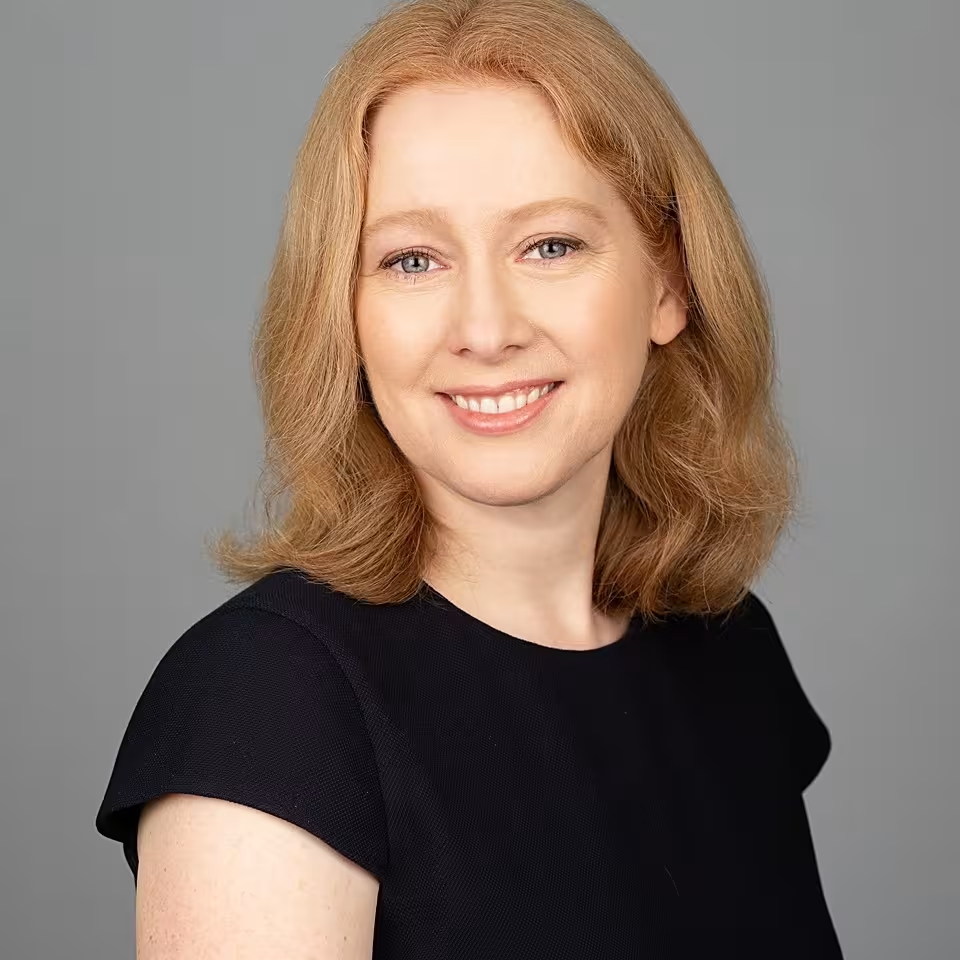
After finishing my PhD in biochemistry, I worked at Pfizer for 16 years before moving into small biotechs about 13 years ago. I was chief clinical officer at the Cell and Gene Therapy Catapult and then became chief scientific officer at Gamma Delta Therapeutics, followed by chief executive officer at Adaptate Biotherapeutics. After Adaptate was successfully acquired by Takeda Pharmaceuticals, I went on to become founding CEO at Cytospire Therapeutics.
Cytospire has a portfolio of next-generation immune cell engager antibodies based on our new gamma delta T-cell activation technology. Our engagers provide powerful activation of both blood-resident and tumour-resident gamma delta T cells to kill cancer cells.
Our approach is very potent but also much safer than traditional cell engager technologies because harnesses the ability of gamma delta T cells to discriminate between healthy cells and tumour cells, sparing tissue with low risk of other side effects such as cytokine release syndrome. In addition, our ability to activate cells that are naturally resident in the tumour microenvironment and able to withstand its low-nutrient, hypoxic conditions is a big advantage over therapies that require previously blood-resident cells to migrate into the tumour on activation.
What did you learn from leading Adaptate Biotherapeutics from its inception to its successful acquisition?
The journey we went on at Adaptate was a very exciting one. The scientific foundation of the company was very strong and we executed relentlessly on the plan to develop therapeutics that we believed had the potential to bring great benefits for patients.
One of the key lessons I learnt was the importance of building a great team with diverse expertise and ways of thinking. We listened to each other, built on each other’s ideas, and supported each other when things didn’t go to plan. The path was intense but great fun.
You cannot tell where the science will lead, so you have to be open to ideas and follow where the data leads.
Another lesson I learnt was the importance of building strong relationships with our investors and collaborators. Takeda invested in the company from the start so we had the chance to build a great understanding of the science and opportunity over several years. Overall, what stands out to me looking back is that when you start out with a company, you cannot tell where the science will lead and what difficulties you are going to encounter, so you have to work as a team, be open to ideas and follow where the data leads.
What attracted you to these leadership roles in start-ups?
I have always been very interested in translation of scientific ideas into therapeutics and so when I finished my PhD, it was a natural choice for me to enter the pharmaceutical industry. My 16 years at Pfizer provided me with an amazing hands-on education in drug discovery and development. I worked on all stages of the process, from early-stage lab projects to filing clinical data on approved medicines, and across a range of different therapeutic areas.
Towards the end of my time at Pfizer, I became involved in setting up the Pfizer Regenerative Medicine Unit, which took me into the newly emerging world of cell and gene therapies. This gave me the taste for working in a small team at the cutting edge of new transformational approaches and I decided to follow this passion, becoming founding chief clinical officer at the Cell and Gene Therapy Catapult. This was my first start-up and I loved the frenetic unpredictability of it. I enjoyed the responsibility of being able to make things happen, translating a vision into a practical strategy and then into reality. I haven’t looked back – I moved into CEO roles and Cytospire is my fourth start-up. Building companies is something that I really enjoy.
Congratulations on winning Woman Entrepreneur of the Year at our 2025 Innovation and Entrepreneurship Awards. What are some challenges and opportunities for entrepreneurial women right now?
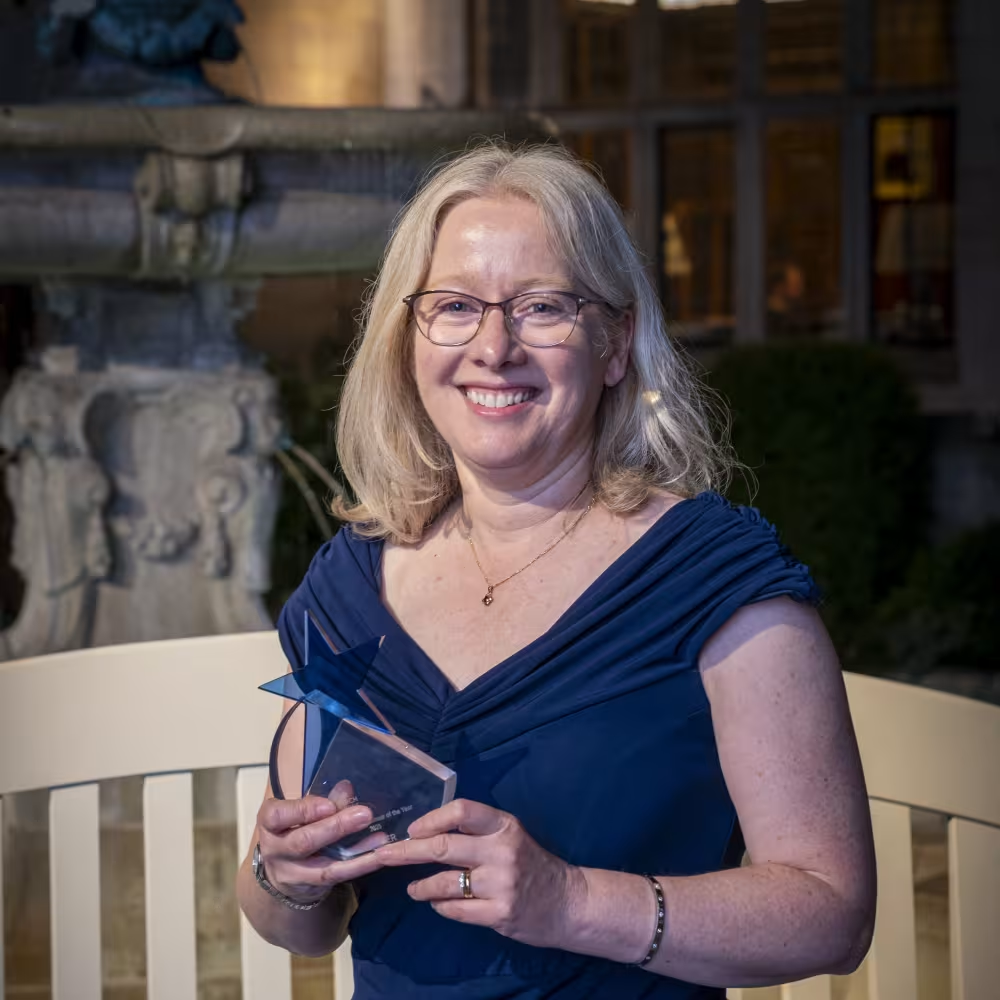
It was a huge honour to be awarded Woman Entrepreneur of the Year. Awards like this are so important because they help to address one of the challenges that new female entrepreneurs face, which is a lack of role models.
I have to say that over my career, on the positive side, I have seen a big increase in the number of women in leadership roles across the industry. When I first reached senior leadership positions, there were many years when I would always be the only woman in the management meeting or in the boardroom. This is definitely no longer the case and there are real opportunities now for women to assume leadership positions and fulfil their potential.
However, there are still fewer women founders and entrepreneurs and statistics show that there is a persistent funding gap making it harder for women to access capital, and the funding environment over this past year has been one of the hardest in recent memory. Developing the networks I mentioned earlier is key to securing the warm intros that are so important in fundraising, and taking advantage of opportunities to join entrepreneurial programmes can really help to achieve this.
How has the industry changed since you’ve been working in it?
The industry has changed hugely over the past 30 years. The UK has always had a strong academic science sector and now the focus and opportunities for translation from academia into industry are far greater than they were when I started. At that time, the two sectors were pretty siloed but now there is a far greater mutual understanding and transfer of expertise.
On a global scale, there have been big changes. One is the rise of China as a major force on the life sciences scene, not just for manufacturing and CRO work or ‘me too’ drugs but now as a source of innovation and emerging biotechs. Additionally, we have seen the huge rise in the role of AI in the drug discovery and development process, which is changing how we do many things. It will be fascinating to see how drugs discovered or optimised using AI fare in the clinic. These are forces that are changing the life sciences industry very quickly and represent both new opportunities and challenges to navigate.
What advice would you give to people who want to explore entrepreneurship in the life sciences?
I would encourage people to find out as much as they can about the various paths they could take and think carefully about what it is they want to do and why. There are many organisations and events available where you can learn about getting started in business.
For those starting out from academia, most universities now have would-be entrepreneur clubs and many – for example, at the Crick where I work on the Translational Advisory Board – have whole translational teams with a huge amount of experience and advice to share.
The groundwork you do before getting started is really important and I would advise taking time to do this and not rush. The life sciences start-up world is still a relatively small one and building a network from day one is crucial – these people will teach you a lot and may one day invest in your company.