
Great science creates possibilities. Turning those possibilities into meaningful benefits for patients takes much more.
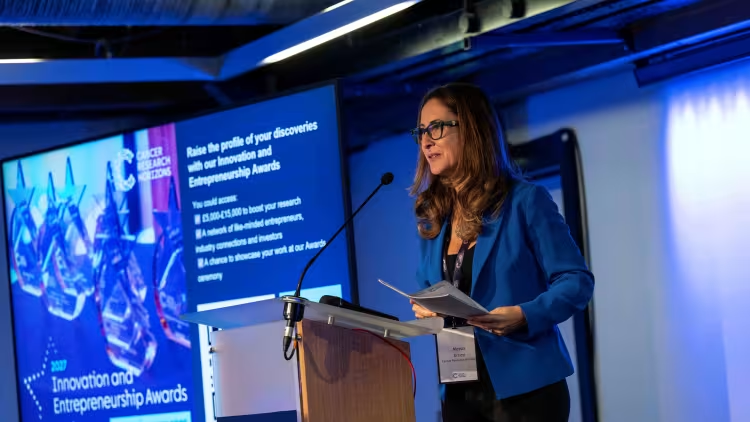
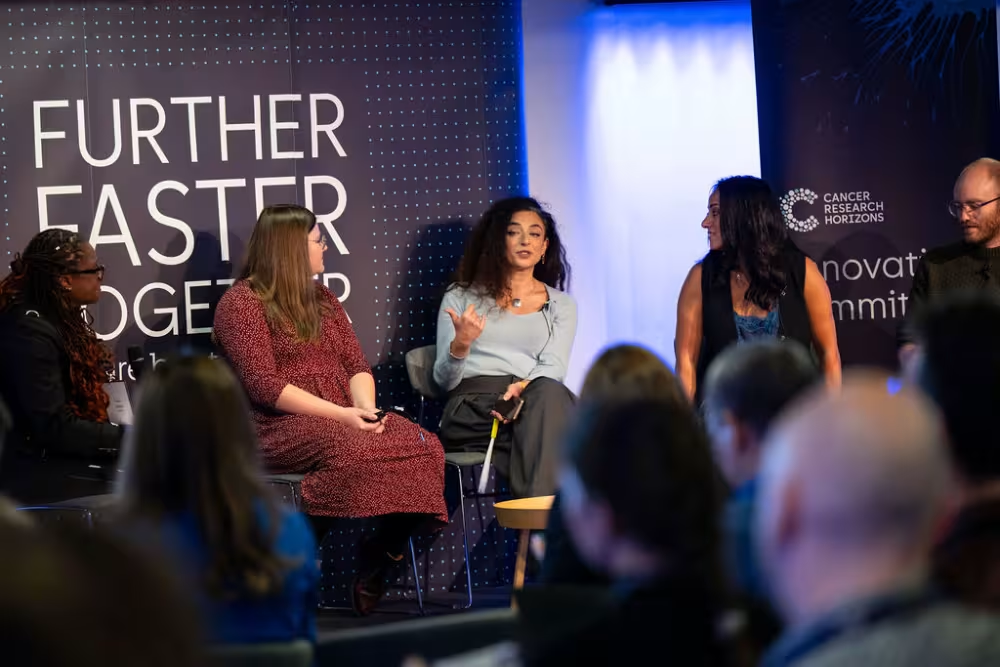
That was a recurring theme at our sixth Innovation Summit in Manchester, where researchers, clinicians, entrepreneurs, investors and industry leaders came together to discuss the future of cancer innovation and what it takes to turn discoveries into patient impact.
We explored advances in cancer biology, emerging therapeutic modalities and AI, alongside the experiences of people working to bring new treatments and technologies forward. We also talked about the importance of collaboration, the role of innovation ecosystems and the challenges of taking risks and trying something new.
We often talk about scientific discovery, translation and entrepreneurship as different activities. In reality, progress depends on how effectively we bring them together.
And throughout that journey, we must never lose sight of why we innovate in the first place: for the patients.
Starting with patients
One of the important reminders from our keynote and final fireside discussion was that patients are people, not simply biological problems to be solved or matched to the optimal treatment. Their needs, experiences and clinical realities must remain central to how we think about innovation.
At the same time, we should never underestimate the importance of fundamental scientific discovery.

Making a discovery and delivering patient impact are not the same thing. Patients benefit when discoveries are translated into technologies and therapies.
Investment in fundamental biology is the first step towards translation. Understanding the mechanisms that drive cancer, the complexity of human biology and the differences between patients creates the foundations for future treatments.
But I don’t believe fundamental research and translational thinking should be seen as competing priorities. They can go hand in hand, encouraging researchers to consider clinical needs and opportunities for translation early in their work.
The question of AI
The Summit could not ignore the impact of AI on innovation. Its potential applications are extensive, from molecular design and toxicity prediction to biomarker discovery, computational pathology and identifying the patients most likely to benefit from a particular treatment.
But one question from the discussion particularly resonated with me: are we using AI simply to do things faster, or can it help us do better science?
Can it help us develop stronger hypotheses, design more informative experiments, improve predictions and make better decisions about which opportunities to pursue?
That is where I think some of the greatest potential lies.
There are, however, important challenges to address. AI cannot compensate for poor-quality or inconsistent data, and increasingly sophisticated models do not remove the need for rigorous scientific interpretation.
It was also interesting to hear about the risk of deskilling. As these tools become more capable, how do we ensure that future scientists and clinicians still develop the knowledge and judgement needed to challenge their outputs?
AI literacy will become increasingly important, but it needs to develop alongside deep scientific and clinical expertise.
Ultimately, the value of these technologies will depend not just on what they can do, but on the questions we ask of them and how well we understand the answers.
A relay race
Innovation is not a solo sprint. It is a relay race. This was one of the messages I wanted to emphasise in my closing remarks.
Great science is the starting point, but what often makes the difference between a brilliant idea and an innovation that reaches patients is the people who come together to take it forward.
No individual or organisation has all the expertise required throughout that journey. Researchers, clinicians, translational specialists, entrepreneurs, investors and industry partners all bring different perspectives and capabilities.

Innovation is a relay race. Success depends on those handovers.
And there is no single route from discovery to impact.
Some innovations are best advanced through spin-outs, others through licensing or industry partnerships. Sometimes the right approach is a combination, with different partners contributing at different stages.
It is important to find the right route for each opportunity.
I like the idea of innovation as a relay race because it captures something important about how progress happens. It is not simply about passing an idea from one person to another. The people who will take an innovation forward can often help shape its direction long before the baton needs to change hands.
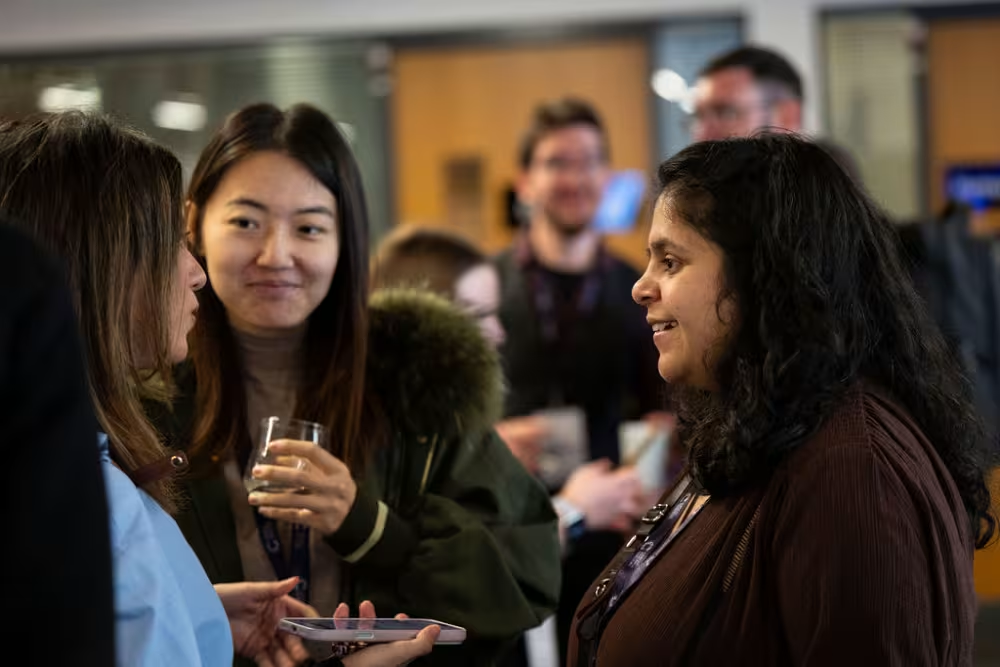
That is why I would encourage researchers and innovators to engage early. Don’t wait until you think you have all the answers. Ask questions, share ideas and involve people who bring different expertise.
An ecosystem is about people, relationships and the connections between them.
Its value comes from people engaging with one another, sharing experience, challenging ideas and creating opportunities that might not otherwise exist.
One of the interesting points raised during the Summit was how successful ecosystems retain and recycle talent and experience.
Not every venture will succeed. But the knowledge and capabilities developed along the way don’t have to disappear. People move on to new ventures, apply what they have learned and bring others with them.
That accumulated experience is a real strength. It is also why I believe we should think about regional and national ecosystems as complementary, creating opportunities for talent, ideas and expertise to connect across institutions and geographical boundaries.
Ultimately, ecosystems only create value when people make use of them.
Curiosity, resilience and courage
Innovation is not just about scientific capability or access to technology and funding. It also requires motivation, curiosity, resilience and a willingness to challenge assumptions.
It requires us to become comfortable with being uncomfortable.
We cannot know in advance which ideas will succeed, which scientific hypotheses will prove correct or which approaches will lead to the next breakthrough. This uncertainty is part of innovation.
In science, we accept that experiments don’t always produce the results we expect. Sometimes those unexpected results are precisely what helps us learn something new.
Yet when we move into entrepreneurship and commercialisation, we often become much less comfortable with failure.
Why should we think differently?
If something doesn’t work, what matters is what we learn and how we use that experience.
This also raises questions about the culture we create around innovation.
We want people to explore ambitious ideas, collaborate beyond their disciplines and pursue opportunities to translate their research. But traditional academic career structures and incentives do not always make those choices easy.
If we want to encourage innovation, we need environments that give people the confidence and support to explore those opportunities.
That means valuing different contributions, encouraging collaboration and recognising that learning and experimentation are essential parts of progress.
It also means fostering curiosity and openness to different perspectives.
Knowing what you don’t know is one of the most valuable qualities in innovation.
Being willing to ask, listen and learn from others is often what allows an idea to develop into something much more ambitious.
Turning possibilities into impact
I came away from the Summit thinking about the opportunities ahead.
We have increasingly powerful tools to understand cancer, new therapeutic approaches to explore and technologies that could fundamentally change how we discover and develop treatments.
Nevertheless, none of this happens in isolation. The journey from scientific discovery to patient benefit depends on the questions we ask, the decisions we make, the expertise we bring together and the environments we create for innovation to flourish.
While innovation can be difficult, uncertain and sometimes frustrating, it is also exciting, creative and rewarding. We shouldn’t forget that it can be fun, too.
The future of cancer innovation will be shaped not only by the science we discover or the technologies we develop, but by the boundaries we are willing to challenge and, above all, the people we bring together to make a difference for patients.
A huge thank you to all our speakers, panellists, chairs, participants and the team who made our sixth Innovation Summit possible. There were so many interesting ideas, conversations and connections throughout the day. I look forward to seeing where they lead.